
What Is a VPS Server? A Complete Beginner's Guide
Your website is often the first impression customers have of your business. If it loads slowly, experiences downtime, or lacks proper security, potential customers may leave before exploring your products or services. A fast, secure, and reliable website helps build trust and creates a better experience for every visitor.
Web hosting powers everything that happens behind the scenes, from page loading and online transactions to customer inquiries and website performance. At iHost, our VPS Hosting solutions provide the perfect balance between affordability and dedicated resources, making them ideal for growing businesses, eCommerce stores, and high-traffic websites.
If your website has outgrown shared hosting due to performance limitations, resource restrictions, or security concerns, upgrading to an iHost VPS Server is a smart next step. You get dedicated resources, enhanced security, full root access, and greater flexibility without the high cost of a dedicated server.
With iHost VPS Hosting, you can enjoy consistent performance, improved website stability, scalable resources, and greater control over your hosting environment. It is a reliable solution designed to support your business growth while keeping costs manageable and performance at
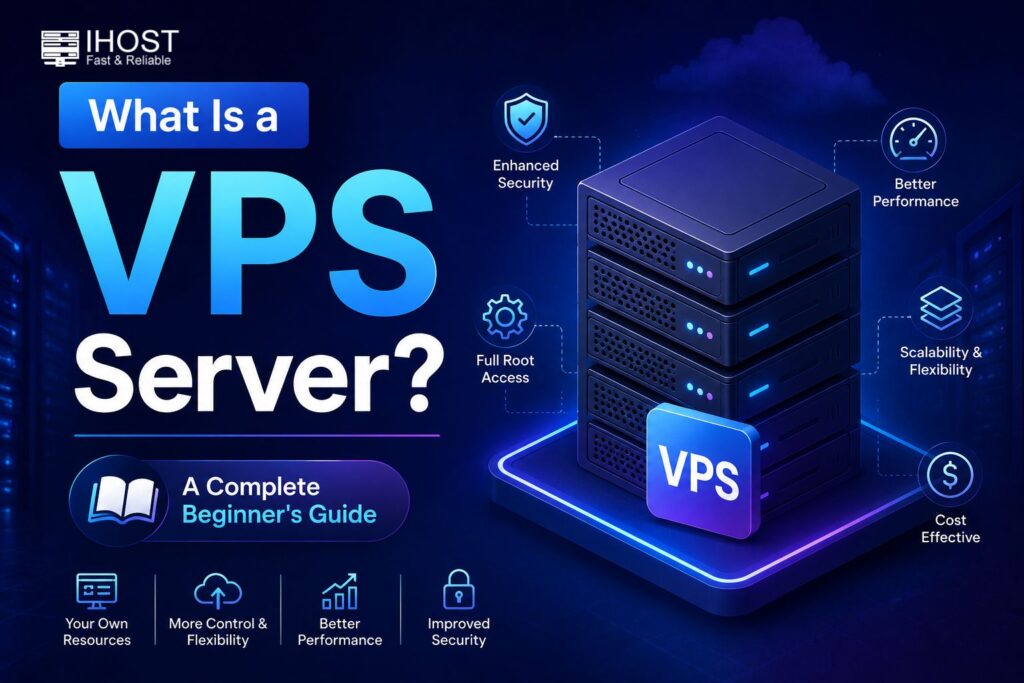
What Is a VPS Server?
VPS server, short for Virtual Private Server, is a type of web hosting that uses virtualization technology to divide a physical server into multiple independent virtual servers. Each virtual server operates separately with its own operating system, storage, RAM, and processing power. Although several users share the same physical machine, every VPS functions like a dedicated server.
Unlike shared hosting, where resources are distributed among many websites, a VPS provides dedicated resources. This means your website performance is not affected by traffic spikes or resource usage from other websites on the same server.
How Does a VPS Server Work?
A virtualization layer called a hypervisor creates separate virtual environments on a physical server. Each environment acts as an independent server with its own resources and settings. Website owners can install software, configure security settings, and manage applications without interfering with other users.
VPS Hosting vs Shared Hosting
Shared hosting is suitable for small websites with limited traffic. However, as traffic grows, shared hosting can become slower and less reliable because resources are shared among many users.
A VPS server offers dedicated resources and greater flexibility. It delivers better speed, stronger security, and more control over server configurations. Businesses often upgrade to VPS hosting when they outgrow shared hosting limitations.
| Feature | Shared Hosting | VPS Hosting |
|---|---|---|
| Performance | Basic | High |
| Security | Moderate | Strong |
| Customization | Limited | Extensive |
| Resources | Shared | Dedicated |
| Scalability | Limited | Flexible |
| Cost | Lower | Moderate |
Key Benefits of a VPS Server
One of the biggest advantages of a VPS server is performance. Dedicated resources allow websites to load faster and handle more visitors without slowing down. Faster websites improve user experience and contribute to better search engine rankings.
Another major benefit is security. Since each VPS operates independently, security risks from neighboring websites are significantly reduced. Businesses handling customer information, online payments, or sensitive data often prefer VPS hosting because of its enhanced protection.
Better Scalability
As your website grows, a VPS server allows you to increase resources such as RAM, CPU, and storage without migrating to a completely new environment. This flexibility makes VPS hosting ideal for growing businesses.
Types of VPS Hosting
There are different VPS hosting options available depending on your technical expertise and business requirements. The right choice depends on how much server management you want to handle yourself.
Managed VPS Hosting
With managed VPS hosting, the hosting provider handles server maintenance, updates, security monitoring, and technical support. This option is ideal for business owners who want high performance without managing server administration tasks.
Unmanaged VPS Hosting
Unmanaged VPS hosting provides full control over the server. Users are responsible for installation, updates, security configurations, and troubleshooting. This option is suitable for developers and experienced administrators.
Who Should Use a VPS Server?
VPS server is an excellent choice for websites that require more resources and reliability than shared hosting can provide. It is commonly used by businesses experiencing steady traffic growth.
Online stores, corporate websites, SaaS applications, development environments, gaming servers, and resource-intensive websites often benefit from VPS hosting. Businesses that need custom software installations and advanced security features also find VPS hosting valuable.
VPS Server Use Cases
Different industries use VPS servers for various purposes. Their flexibility and scalability make them suitable for a wide range of applications.
| Use Case | Benefit |
|---|---|
| E-commerce Stores | Better performance and security |
| Business Websites | Reliable uptime |
| Application Hosting | Custom software support |
| Development Testing | Full server control |
| Email Servers | Enhanced privacy |
| Gaming Servers | Dedicated resources |
How Much Does a VPS Server Cost?
VPS hosting prices vary depending on resources, management level, and hosting provider. Entry-level plans typically cost more than shared hosting but provide significantly better performance and flexibility.
Factors affecting VPS pricing include RAM, CPU cores, storage capacity, bandwidth allocation, operating system choice, and support services. Managed VPS plans generally cost more because they include technical assistance and maintenance.
How to Choose the Right VPS Server
Selecting the right VPS server requires careful consideration of your website’s current needs and future growth plans. A hosting solution should support your business goals without creating unnecessary expenses.
Look for providers that offer SSD storage, high uptime guarantees, scalable resources, robust security features, reliable customer support, and data centers located near your target audience
Important Features to Consider
Pay attention to server performance, backup options, firewall protection, operating system choices, control panel availability, and support response times. These factors directly impact your hosting experience.
VPS Server vs Dedicated Server
While both options provide dedicated resources, a dedicated server gives you access to an entire physical machine. VPS hosting provides a virtual environment within a shared physical server.
For most growing businesses, VPS hosting delivers an excellent balance between affordability and performance. Dedicated servers are generally reserved for large organizations with extremely high resource requirements.
| Feature | VPS Server | Dedicated Server |
|---|---|---|
| Cost | Moderate | High |
| Scalability | Excellent | Limited |
| Management | Easier | More Complex |
| Resources | Dedicated Virtual Resources | Entire Physical Server |
| Suitable For | Growing Businesses | Enterprise Applications |
Other Types of Web Hosting
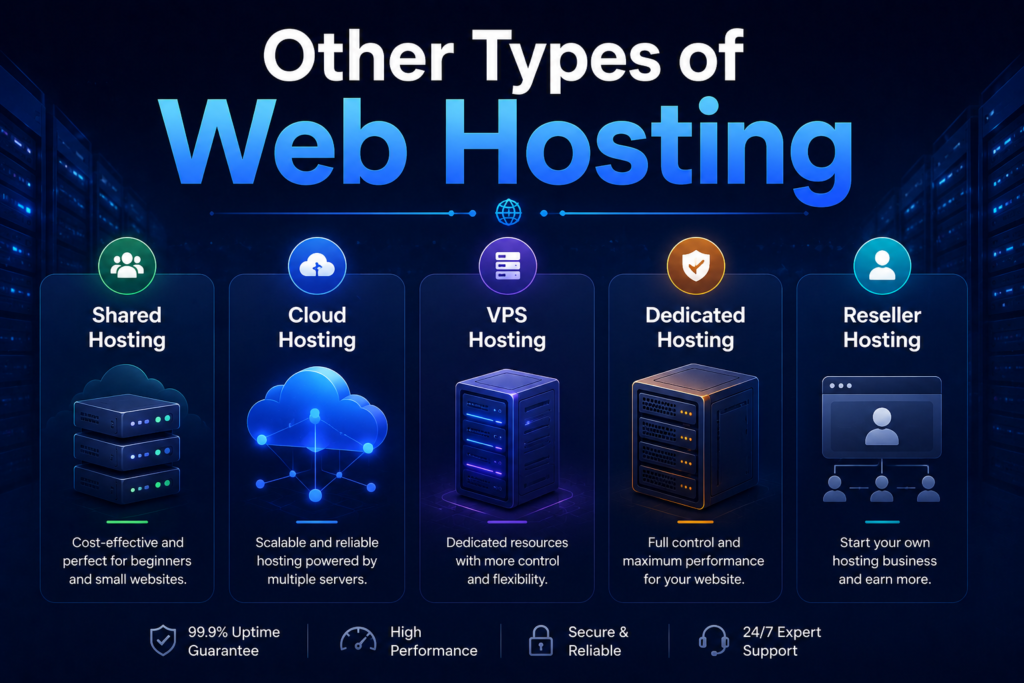
Choosing the right hosting solution is essential for website performance, security, and long-term growth. While VPS Hosting offers an excellent balance of resources and affordability, several other hosting options are available to meet different business needs. Understanding these hosting types can help you select the best solution for your website.
Shared Hosting
Shared hosting is one of the most affordable web hosting options available. Multiple websites share the same server resources, including CPU, memory, and storage. It works well for personal blogs, startup websites, and small businesses with low traffic. However, performance can fluctuate when other websites on the server experience high traffic, making it less suitable for growing businesses that require consistent speed and reliability.
VPS Hosting
VPS Hosting uses virtualization technology to divide a physical server into multiple independent virtual servers. Each VPS receives dedicated resources, offering greater control, enhanced security, and improved performance. It is an ideal choice for businesses that have outgrown shared hosting and need a scalable solution without the cost of a dedicated server.
Dedicated Hosting
Dedicated hosting provides an entire physical server exclusively for your website or application. This hosting type delivers maximum performance, complete control, and advanced customization options. Businesses with high-traffic websites, enterprise applications, or strict security requirements often choose dedicated hosting because it eliminates resource sharing altogether.
Cloud Hosting
Cloud hosting distributes website resources across multiple interconnected servers instead of relying on a single machine. This setup improves reliability, uptime, and scalability. If one server encounters issues, another server automatically takes over. Cloud hosting is popular among businesses that experience fluctuating traffic and require flexible resource allocation.
WordPress Hosting
WordPress hosting is specifically optimized for WordPress websites. It includes performance enhancements, automatic updates, security improvements, and specialized support for WordPress users. This hosting solution is suitable for bloggers, businesses, and eCommerce stores running their websites on the WordPress platform.
Reseller Hosting
Reseller hosting allows individuals or businesses to purchase hosting resources and resell them to their own customers. Web developers, digital agencies, and entrepreneurs often use reseller hosting to create their own hosting brands without managing physical servers
Colocation Hosting
Colocation hosting allows businesses to place their own server hardware inside a professional data center. The provider supplies power, cooling, network connectivity, and physical security while the business maintains full control of the server. This option is commonly used by organizations requiring custom hardware configurations and maximum control over their infrastructure.
VPS Hosting vs. Other Hosting Types (Side-by-Side)
Different hosting solutions serve different purposes. The following comparison highlights how VPS Hosting stands against other popular hosting options.
| Feature | Shared Hosting | VPS Hosting | Cloud Hosting | Dedicated Hosting |
|---|---|---|---|---|
| Performance | Basic | High | High | Very High |
| Security | Moderate | Strong | Strong | Maximum |
| Scalability | Limited | Flexible | Excellent | Limited |
| Customization | Low | High | High | Complete |
| Cost | Low | Moderate | Moderate to High | High |
| Root Access | No | Yes | Yes | Yes |
| Best For | Small Websites | Growing Businesses | Dynamic Workloads | Enterprise Projects |
Pricing: The cost of a VPS
The cost increases or decreases depending on the region, hardware, storage type, bandwidth and whether it is managed or unmanaged. From a price perspective, VPS hosting provides options that serve budget-conscious users as well as performance-driven businesses.
As an example, iHost’ Pak-based VPS hosting lineup begins at 6,280PKR per month for their PK VPS-1 Plan, which delivers a 1 vCore CPU, 2 GB RAM, 40 GB storage, and 100 GB bandwidth. Additionally, with optional managed support and cPanel/WHM available.
Moving to the PK VPS-2 tier bumps the fee to 7,638 per month and expands CPU resources to two vCores, offering 4 GB RAM, 120 GB disk space, and 200 GB in total bandwidth.
Heading over to the cloud side, iHost, the best VPS providers, offers a Cloud Basic VPS plan that is available for around 3,339PKR per month. It comes equipped with 2 vCore CPU, 4 GB DDR5 RAM, 40 GB NVMe SSD storage, and a large 20 TB bandwidth, alongside the bundled control panel and Encrypt SSL.
These pricing levels demonstrate how VPS hosting can range from an economical entry-level setup to performance-boosted configurations for expanding websites, either through a package-based VPS or cloud-based solutions.
How to Select the Right VPS Provider
Choosing the right VPS provider is just as important as selecting the hosting type itself. A reliable provider ensures better uptime, stronger security, and a smoother hosting experience.
1. SLA Uptime Guarantee
A Service Level Agreement (SLA) defines the provider’s uptime commitment. Look for providers offering at least a 99.9% uptime guarantee. High uptime reduces downtime risks and ensures your website remains accessible to visitors around the clock.
2. Resource Allocation
Evaluate how much RAM, CPU power, storage, and bandwidth are included in each plan. Dedicated resources ensure consistent website performance and prevent slowdowns during traffic spikes.
3. Scalability Options
Business growth often leads to increased resource requirements. A quality VPS provider should allow easy upgrades without requiring complicated migrations or extended downtime.
4. Managed and Unmanaged VPS
Some providers offer managed VPS services where technical tasks are handled for you. Others provide unmanaged plans that give complete server control. Choose the option that best matches your technical expertise and business needs.
5. Customer Support
Technical issues can occur at any time. Reliable 24/7 support through live chat, tickets, or phone assistance helps resolve problems quickly and minimizes disruption to your website.
6. Data Center Locations
Server location directly affects website loading speed. Select a provider with data centers close to your target audience to improve performance and reduce latency.
7. Security Features
Strong security measures protect your website from cyber threats. Look for providers offering firewalls, DDoS protection, malware scanning, regular backups, and SSL certificate support.
8. Transparency on Pricing
Some providers advertise low introductory prices but add hidden fees later. Review pricing structures carefully and ensure all costs are clearly explained before purchasing.
9. Reputation and Reviews
Customer reviews and independent ratings provide valuable insights into a hosting provider’s reliability and service quality. Research feedback from real users before making a decision.
10. Trial or Money-Back Guarantee
A money-back guarantee allows you to test the hosting service with minimal risk. This provides an opportunity to evaluate performance, support quality, and overall satisfaction before committing long term.
Conclusion
Web hosting plays a critical role in your online success. The performance, reliability, and security of your hosting environment directly impact your website’s user experience, search rankings, and business growth.
iHost VPS Hosting offers the perfect balance of performance, flexibility, and affordability. It is an ideal solution for businesses that have outgrown shared hosting but do not require the cost and complexity of a dedicated server. With dedicated resources, greater control, and scalable infrastructure, VPS hosting provides everything needed to support growing websites and applications.
Whether you choose a managed VPS or a fully customizable VPS environment, iHost delivers powerful hosting solutions backed by high-performance servers, advanced security measures, and reliable uptime. Every VPS plan is designed to provide consistent speed, enhanced protection, and the resources required to handle increasing traffic and business demands.
Take your website to the next level with iHost VPS Hosting. Enjoy faster loading times, stronger security, improved stability, and the flexibility to scale as your business grows. Build a reliable online presence with hosting designed for performance and long-term success.
FAQs
What is a VPS server used for?
A VPS server is used for hosting websites, applications, email services, online stores, and development environments that require dedicated resources.
Is VPS better than shared hosting?
Yes. VPS hosting offers better performance, security, and scalability compared to shared hosting.
Do I need technical knowledge to use a VPS server?
Not necessarily. Managed VPS hosting includes technical support and server management services.
Can a VPS handle high traffic websites?
Yes. VPS hosting can manage significantly more traffic than shared hosting and can be upgraded as your website grows.
Is VPS hosting good for WordPress?
Yes. VPS hosting is an excellent choice for WordPress websites that require faster loading speeds, improved security, and better performance.