
Choosing the Right Hosting Provider for You
Your website needs a hosting setup that fits how you work today and how you plan to grow next. This page helps you choose a web hosting solution with the right mix of performance, email support, WordPress readiness, security basics, and practical support—without paying for features you do not need. Whether you are launching a business site, moving from a slow provider, or comparing options like shared hosting, WordPress hosting, cloud hosting, or email-inclusive plans, the right decision starts with matching the service to your real use case.

What hosting setup is right for your website?
The right hosting setup is the one that keeps your site fast, secure, easy to manage, and affordable for your current traffic level while leaving room to scale. A small brochure site may only need reliable shared web hosting, while an online store, agency portfolio, or content-heavy WordPress site may benefit from managed WordPress hosting or a more flexible cloud environment. If email is central to your business, you should also consider mailbox reliability, webmail access, spam filtering, and migration support before choosing a plan.
A good provider should make the trade-offs clear. You should know what storage is included, how backups work, whether SSL is available, how support is handled, and what happens when your traffic increases. That clarity matters more than chasing the lowest monthly price or choosing a famous name without understanding the service behind it.
Hosting built around real website needs
Hosting is not just server space. It is the foundation that affects how quickly your pages load, how reliably customers can reach you, how easily you can publish updates, and how confidently you can recover from a mistake or technical issue. A strong hosting provider gives you the tools to manage the essentials while keeping the setup understandable.
For many website owners, the most practical choice is a plan that balances simplicity with dependable infrastructure. You may not need enterprise-grade complexity, but you do need a stable control panel, database support, professional email options, SSL, and responsive help when something breaks. If you are comparing local and international options, a useful reference point for web hosting in Pakistan is https://www.ihost.com.pk/web-hosting-in-pakistan/.
This product page is designed for buyers who want a straightforward path to Hosting that fits their website, not a maze of technical jargon. The goal is simple: choose a provider that supports your business instead of slowing it down.
Core features that make hosting easier to manage
The best hosting choice is usually the one that removes friction from daily website management. You should be able to publish content, manage files, create email accounts, install applications, view resource usage, and contact support without needing a system administrator for every small task.
Look for these practical features when comparing providers:
- Reliable uptime foundation: Your hosting environment should be built to keep your website reachable during normal business demand.
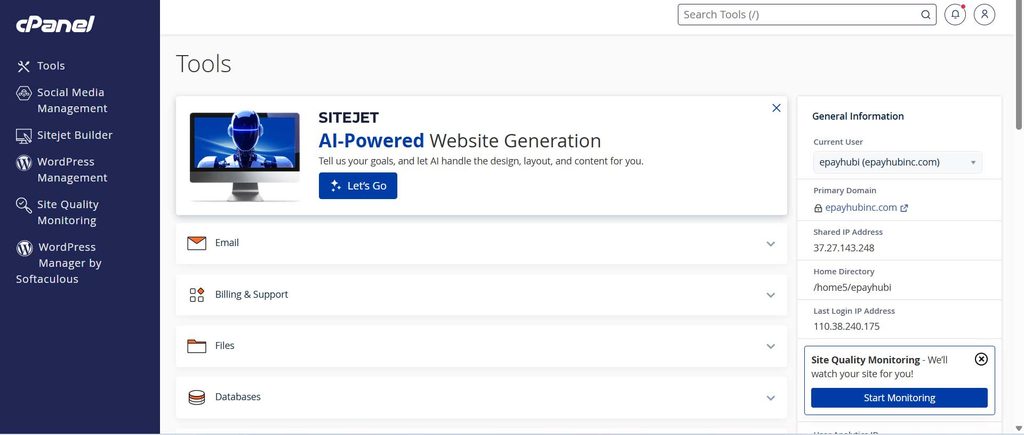
- Control panel access: A clear dashboard helps you manage domains, files, databases, email, SSL, and backups in one place.
- WordPress support: If your site runs on WordPress, look for one-click installation, PHP and database compatibility, caching options, and update-friendly tools.
- Business email and webmail: Built-in email accounts and browser-based access are useful when your team needs branded addresses such as info@yourdomain.com.
- SSL availability: SSL helps protect visitor data and supports trust signals in modern browsers.
- Backup options: Backups reduce risk when files are deleted, updates fail, or a site needs to be restored.
- Scalable resources: The ability to move up to a larger plan matters when traffic, storage, or email demand increases.
- Human support: Documentation is helpful, but access to support is essential when a site is down or a migration gets complicated.
These features turn hosting from a hidden technical expense into a manageable business tool. Instead of wondering whether your site can handle a product launch, campaign, or seasonal increase in traffic, you have a service structure that can grow with you.
Plans for different types of customers
Not every website needs the same kind of hosting. A personal blog, a restaurant website, a company profile, an ecommerce store, and a learning platform all place different demands on storage, security, performance, and maintenance. Choosing by use case is usually more reliable than choosing by price alone.
Shared web hosting for simple sites
Shared web hosting is often a practical starting point for new websites, small businesses, portfolios, and informational pages. It keeps costs manageable because multiple websites share server resources, while the provider handles the server-level setup. This works well when traffic is moderate and your site does not require custom server configuration.
The main benefit is simplicity. You can connect a domain, install a CMS, set up email, and publish pages without managing infrastructure. The trade-off is that shared resources may not suit high-traffic stores or resource-heavy applications, so you should confirm upgrade paths before committing.
WordPress hosting for content-driven websites
WordPress hosting is designed for websites built on WordPress, including blogs, business pages, service websites, and WooCommerce stores. The right WordPress hosting plan should support the technical requirements of WordPress while making common tasks easier, such as installation, updates, SSL setup, and performance tuning.
This option is especially useful if your team regularly publishes articles, landing pages, service pages, or product updates. A hosting environment that understands WordPress reduces friction and can help prevent common issues caused by incompatible settings, outdated software, or slow database performance.
Email-focused hosting for professional communication
Some buyers think about hosting only in terms of website files, but business email can be just as important. If your company relies on email for leads, support, invoicing, or internal communication, you need to check mailbox limits, spam filtering, forwarding, autoresponders, and webmail usability.
Searches like rackspace hosting webmail show how often people look for dependable email access tied to hosting or managed mail services. The lesson is not that every business needs the same provider; it is that email access should be part of your decision from the beginning. A good plan should make it easy to create branded inboxes and access them from a browser or mail app.
Specialized hosting for niche projects
Some projects need a more specialized environment. For example, someone searching for apex hosting may be comparing game server hosting rather than traditional website hosting. That is a different category from standard business web hosting, and it should be evaluated using different criteria such as game performance, player slots, mod support, and server locations.
This distinction matters because “hosting” is a broad term. The same word can refer to website hosting, email hosting, application hosting, game hosting, or even entertainment searches like who is hosting SNL tonight and hosting SNL tonight. For your business website, focus on the hosting category that directly supports your domain, content, customer experience, and growth goals.
Benefits you can feel in daily operations
A well-matched hosting plan does more than keep a website online. It makes routine work easier and gives your team fewer technical distractions. When hosting is reliable, your marketing pages load when prospects click an ad, your contact forms are more dependable, and your staff can focus on customers instead of troubleshooting server issues.
The practical benefits include:
- A smoother launch process because the essentials—domain connection, SSL, files, databases, and email—are easier to coordinate.
- Fewer avoidable delays when updates, plugin changes, or small technical tasks can be handled through a clear control panel.
- Better customer trust when your site loads properly, shows secure browser indicators, and uses professional domain-based email.
- More confident growth because you can upgrade resources instead of rebuilding from scratch when your needs change.
- Simpler troubleshooting when support, documentation, backups, and account tools are available in one service environment.
Imagine a small service business preparing a new campaign. With weak hosting, the owner may worry about slow pages, broken forms, missing email messages, or a site crash after updates. With the right hosting setup, the campaign can send visitors to a stable landing page, collect inquiries through a working form, and support follow-up from a branded email address.
Pricing that matches your stage
Hosting pricing should be understandable before you buy. Since providers structure plans differently, the best approach is to compare what is included rather than looking only at the headline monthly price. A very cheap plan may become expensive if backups, SSL, email, migration, or adequate storage are add-ons.
Use this buying checklist when reviewing pricing:
- Starting cost: What is the introductory price, and what does it renew at later?
- Billing term: Are you paying monthly, annually, or for multiple years upfront?
- Included domains: Can you host one website or multiple websites on the same plan?
- Storage and bandwidth: Are the limits suitable for your expected traffic, media files, and email use?
- Email accounts: Are mailboxes included, limited, or sold separately?
- SSL and backups: Are these built into the plan or charged as extras?
- Migration help: Will the provider assist if you are moving from another host?
- Upgrade path: Can you move to a higher plan without a complicated rebuild?
A transparent hosting provider should make these points easy to understand. If a plan looks affordable but hides important limitations, it may cost more in lost time, reduced performance, or extra services.
Technical specifications to review before you choose
You do not need to be a developer to ask smart technical questions. A good provider should be able to explain the specifications in plain language and connect them to your website’s needs. The goal is not to buy the biggest plan; it is to buy the right amount of capacity, control, and support.
Review these specifications before making a decision:
| Specification | Why it matters |
|---|---|
| Storage | Determines how much room you have for website files, images, databases, and email. |
| Bandwidth or traffic allowance | Affects how much visitor activity your plan can support. |
| PHP and database support | Essential for WordPress and many dynamic websites. |
| SSL support | Helps secure data transfer and improves visitor confidence. |
| Backup frequency | Defines how easily you can recover from mistakes or technical issues. |
| Email capacity | Impacts mailbox size, number of accounts, and daily communication reliability. |
| Server location or network quality | Can influence loading experience for your main audience. |
| Support availability | Matters when urgent problems occur outside normal working hours. |
These details help you compare providers on substance. A plan with strong marketing language but unclear specifications is harder to trust than a plan that explains what you receive and how it supports your website.
A simple path from comparison to launch
Choosing a hosting provider becomes easier when you follow a short process. Start with your website type, then confirm the features you need, then compare pricing and support. This prevents you from overbuying or selecting a plan that cannot support your next step.
Here is a practical way to get started:
- Define your website goal. Decide whether you are launching a business site, blog, store, portfolio, community, or application.
- List must-have tools. Include WordPress, email, SSL, backups, databases, staging, or migration help if needed.
- Estimate your current size. Consider number of pages, images, expected traffic, email users, and growth plans.
- Compare plan limits. Check storage, traffic, websites allowed, mailboxes, backup rules, and renewal pricing.
- Ask support questions. Contact the provider before buying and see whether the answers are clear and useful.
- Start with the right tier. Choose a plan that covers today’s needs with a realistic upgrade path for tomorrow.
This process gives you a decision you can defend. Instead of choosing hosting because the plan looks popular, you choose it because it fits your website’s workload, your team’s skills, and your growth plans.
Why the right provider is worth choosing carefully
The cheapest hosting provider is not always the best value, and the most advanced platform is not always the best fit. The right choice sits between those extremes: dependable enough for your visitors, simple enough for your team, and flexible enough for your future. That balance is what turns hosting from a technical purchase into a business decision.
If your site is central to your sales, credibility, content, or customer communication, give hosting the attention it deserves. Review the plan details, check what support includes, confirm email and WordPress requirements, and make sure there is a clean upgrade path. When you are ready, choose a hosting plan that matches the way your website actually works—and gives you room to grow without unnecessary complexity.