
Website Builder vs Web Hosting: The Difference in Features, Design, and Scalability
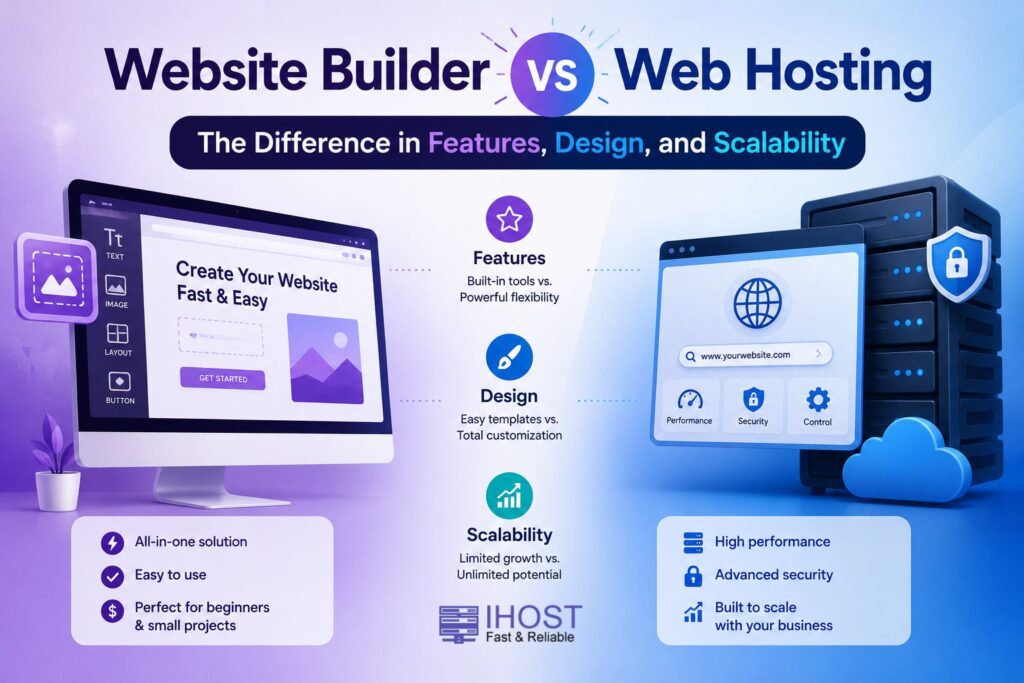
In today’s digital world, every business needs a strong online presence to stay competitive. Whether you run a startup, eCommerce store, blog, or corporate company, your website plays a major role in attracting customers and building trust. However, many business owners get confused when choosing between a website builder and a web hosting service. Although both are important for creating a website, they serve different purposes and offer different levels of control, customization, and scalability.
Understanding the difference between a website builder and web hosting helps you make the right decision for your business goals. A website builder allows beginners to create websites quickly using ready-made templates and drag-and-drop tools. In contrast, web hosting provides the server resources needed to store website files and deliver them online. Businesses looking for flexibility, better performance, and long-term growth often prefer reliable hosting solutions like those offered by iHost Pakistan, which provides hosting, domains, WordPress hosting, and website development services for businesses across Pakistan.
Key Takeaways
- A website builder is ideal for beginners and small businesses that need a website quickly without technical expertise.
- Web hosting provides greater flexibility, performance, and control for businesses planning long-term growth.
- Website builders include design tools, hosting, maintenance, and security in one package, making them easy to manage.
- Web hosting allows complete customization through content management systems and custom website development.
- Businesses that require advanced features, custom integrations, and scalable infrastructure benefit more from professional hosting solutions.
- Website builders are generally more affordable at the beginning, while web hosting often delivers better long-term value and return on investment.
- Custom websites offer stronger branding opportunities and help businesses create a unique online identity.
- Web hosting provides better scalability, allowing websites to handle increased traffic and expanding business requirements.
- Growing eCommerce stores and corporate websites typically achieve better results with a hosting-based solution.
- Choosing between a website builder and web hosting depends on your business goals, budget, technical requirements, and future growth plans.
What Is a Website Builder?
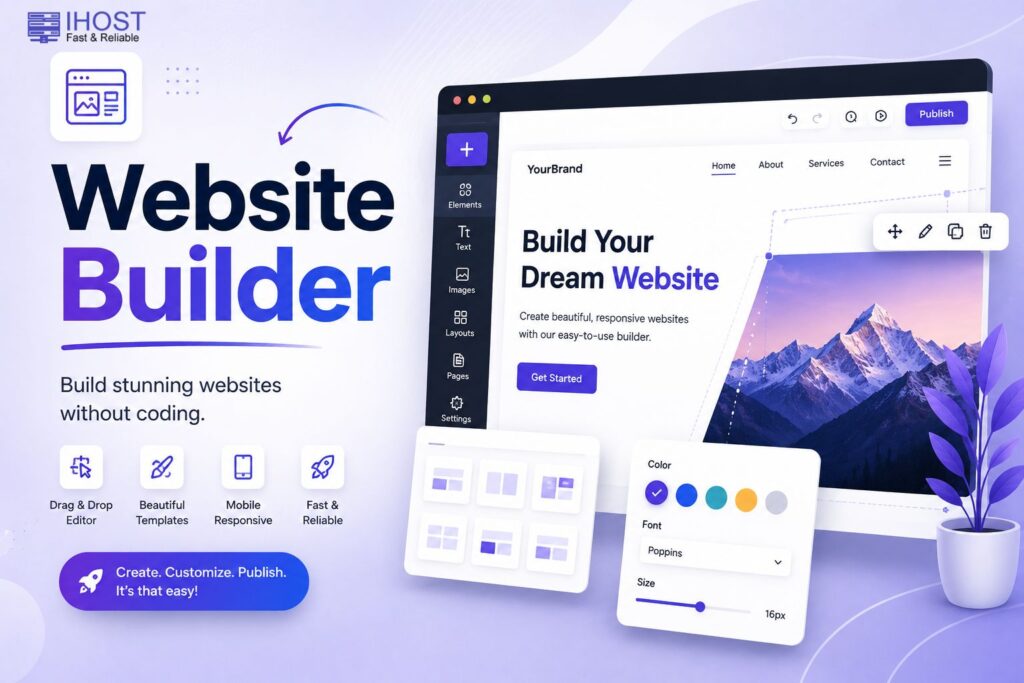
Website builders are user-friendly platforms designed to help people create websites without any coding knowledge. They provide intuitive drag-and-drop editors, pre-designed templates, and built-in customization tools, making website creation simple and accessible for beginners, small businesses, and entrepreneurs.
Most modern website builders also include web hosting as part of their package. This means your website files are automatically stored on the provider’s servers and made available online without requiring a separate hosting plan. As a result, users can design, publish, and manage their websites from a single platform, making the entire process faster and more convenient.
What Is Web Hosting?
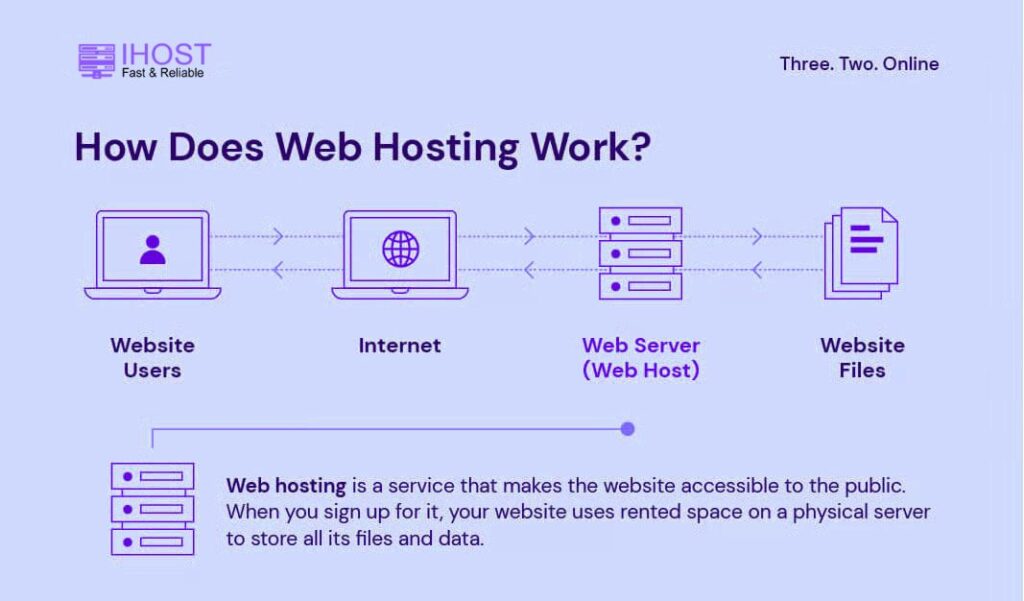
A web hosting service stores website files on a server and makes them available online. Every website requires hosting because visitors need access to the files that make up the website. Without hosting, a website cannot be viewed on the internet.
Unlike website builders, web hosting allows businesses to choose how they want to build their website. They can use WordPress, custom development, or other content management systems. This flexibility gives website owners more control over design, performance, and functionality. Hosting solutions such as Shared Hosting, WordPress Hosting, Cloud Hosting, and VPS Hosting are commonly used depending on business requirements.
Shared Web Hosting
Shared web hosting is one of the most popular and budget-friendly hosting solutions. In this environment, multiple websites share the same server resources, including storage, bandwidth, and processing power. It is an excellent choice for personal blogs, startup websites, and small to medium-sized businesses that do not require extensive server resources. Its affordability and ease of use make it a common starting point for new website owners.
Cloud Hosting
Cloud hosting uses a network of interconnected servers instead of relying on a single physical server. This setup improves reliability, scalability, and performance because resources can be distributed across multiple servers. It is particularly suitable for high-traffic websites, online stores, and web applications that require consistent uptime and the ability to handle sudden traffic increases without performance issues.
VPS Hosting
VPS (Virtual Private Server) hosting divides a physical server into multiple independent virtual environments. Each user receives dedicated resources such as CPU, RAM, and storage, providing greater control, improved security, and better performance compared to shared hosting. VPS hosting is ideal for growing websites and businesses that need flexibility, customization, and the ability to scale resources as demand increases.
WordPress Hosting
WordPress hosting is a specialized hosting solution designed specifically for WordPress websites. It is optimized to deliver better speed, security, and performance for the WordPress content management system. Many WordPress hosting plans include features such as automatic updates, enhanced security settings, built-in caching tools like LiteSpeed Cache, and one-click WordPress installation, making website management easier and more efficient.
Website Builder vs Web Hosting: Key Differences
The biggest difference between a website builder and web hosting is flexibility. Website builders focus on simplicity and speed, while hosting focuses on control and scalability. A website builder combines website creation tools and hosting into one package. Web hosting gives users the freedom to choose their preferred development method and website platform.
Businesses planning long-term growth often require advanced features, custom integrations, and performance optimization. In these situations, web hosting becomes a stronger option because it provides greater control over the website environment. This allows businesses to improve website performance, implement custom functionality, and expand their digital presence without platform limitations.
| Feature | Website Builder | Web Hosting |
|---|---|---|
| Ease of Use | Very Easy | Moderate |
| Customization | Limited | High |
| Scalability | Moderate | Excellent |
| Website Control | Partial | Full |
| Performance Optimization | Basic | Advanced |
| Best For | Beginners | Growing Businesses |
| Migration Flexibility | Limited | Flexible |
| Long-Term Growth | Restricted | Highly Scalable |
Website Builder vs Web Hosting: Features
Comparison
Website builders include built-in tools such as templates, contact forms, image galleries, basic SEO settings, and eCommerce features. Everything works inside a controlled environment, which reduces technical complexity. This convenience makes website builders attractive for startups and small businesses that need a fast launch.
A web hosting service offers significantly greater flexibility. Businesses can install custom plugins, advanced applications, customer management systems, booking platforms, and payment gateways. This freedom allows companies to build highly customized websites tailored to their specific operational requirements. Hosting also supports advanced technologies that improve website speed, functionality, and user experience.
Website Builder vs Web Hosting: Cost Comparison
Cost is one of the main reasons many businesses initially choose website builders. Most builders operate on monthly subscription plans that include hosting, security, maintenance, and design tools. This makes budgeting easier because expenses remain predictable.
Web hosting costs vary depending on storage, bandwidth, performance requirements, and website complexity. While hosting may require additional investments such as premium themes or custom development, businesses often gain greater value through improved flexibility and long-term scalability. Many hosting providers also offer affordable hosting plans for startups and growing businesses.
Website Builder vs Web Hosting: Design and Customization
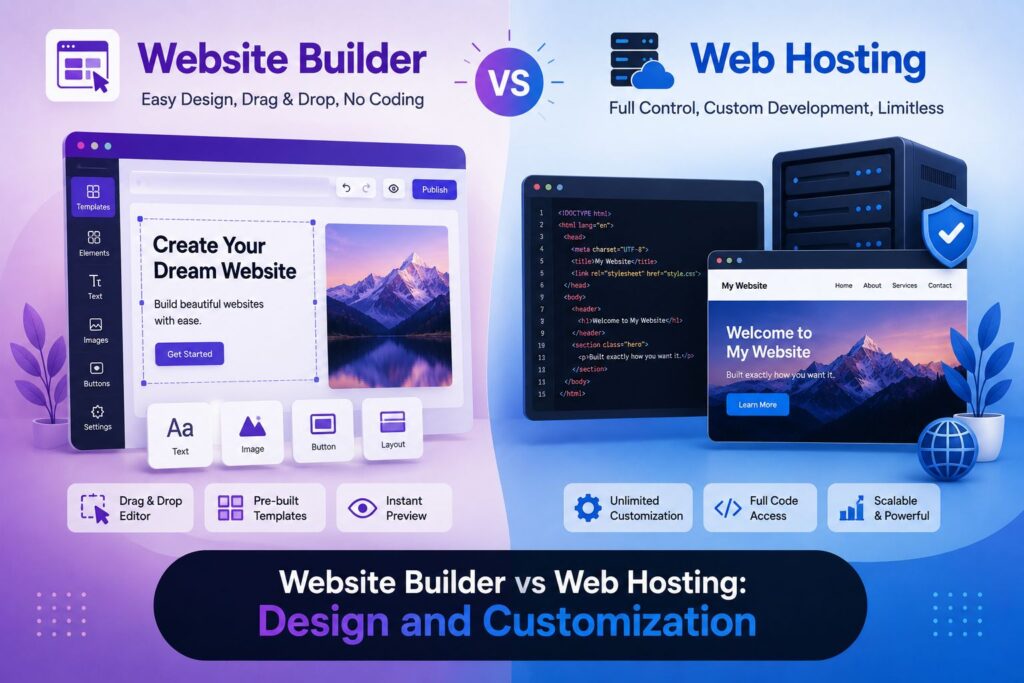
Website builders provide templates that help users create professional-looking websites quickly. However, customization options remain limited because users must work within the platform’s framework. Businesses looking for unique branding often encounter restrictions when trying to create highly customized designs.
With web hosting, businesses can create a fully custom website using WordPress or professional development services. This approach provides complete design freedom and allows companies to create a website that perfectly matches their brand identity. Custom development also supports advanced functionality that may not be available through website builders.
Website Builder vs Web Hosting: Performance and Scalability
As websites grow, performance becomes increasingly important. Slow-loading websites can negatively impact user experience, SEO rankings, and conversion rates. Website builders provide standardized performance settings that may not fully support high-traffic websites or advanced applications.
Web hosting allows businesses to optimize server resources, upgrade hosting plans, and improve performance as traffic increases. Solutions such as Cloud Hosting and VPS Hosting provide additional resources that support business growth. According to industry recommendations, scalable hosting environments are essential for websites expecting long-term expansion.
Website Builder vs Web Hosting: Which Option Is Best for Small Businesses?
For small businesses launching their first website, a website builder can be an excellent starting point. It offers simplicity, affordability, and quick deployment. Local businesses, freelancers, and startups often use website builders to establish an online presence without large upfront costs.
However, businesses planning future expansion should consider web hosting from the beginning. Hosting provides greater flexibility, stronger SEO opportunities, and the ability to add advanced features as the business grows. Many successful companies start small but eventually require custom functionality that website builders cannot easily provide.
Website Builder vs Web Hosting: Which Solution Should You Choose?
The right choice depends on your business goals. If you need a simple website quickly and have limited technical knowledge, a website builder may meet your needs. It provides convenience and reduces the complexity of website management.
If your goal is long-term growth, advanced customization, better SEO performance, and complete ownership of your website, web hosting is the stronger investment. Reliable hosting providers like iHost Pakistan offer scalable hosting solutions, domain registration, WordPress hosting, website development services, strong security protection, and 24/7 support to help businesses grow online.
Frequently Asked Questions About Website Builders and Web Hosting
Do I need web hosting if I use a website builder?
Most website builders include hosting within their subscription plans. Users usually do not need to purchase separate hosting unless they migrate to another platform later.
Which option is better for SEO?
Web hosting generally provides greater SEO flexibility because users can fully optimize website structure, speed, schema markup, and technical settings.
Can I move from a website builder to web hosting later?
Yes, many businesses start with a website builder and later migrate to a hosting platform as their website requirements become more advanced.
Which option is better for eCommerce websites?
Small online stores can work well with website builders. However, growing eCommerce businesses often benefit more from web hosting because it supports advanced customization and scalability.
Which option provides better control?
Web hosting provides full ownership and control over website files, server settings, and development options. Website builders usually operate within platform restrictions.
Conclusion
The debate between website builder vs web hosting ultimately comes down to your business goals, budget, and future plans. Website builders are ideal for beginners who need a simple website quickly. Web hosting delivers greater flexibility, stronger customization, improved SEO potential, and long-term scalability.
For businesses serious about building a professional online presence, investing in reliable hosting creates a stronger foundation for future growth. Whether you need Shared Hosting, WordPress Hosting, Cloud Hosting, VPS Hosting, domain registration, or website development services, choosing a scalable hosting solution can help your business grow confidently in Pakistan’s expanding digital market.
The author
iHost provides professional website development and web hosting solutions for businesses across Pakistan. From WordPress Websites, Shopify Stores, Ecommerce Websites, Business Websites, Healthcare Websites, Education Portals, Real Estate Platforms, and Custom PHP Development to reliable hosting services, iHost helps businesses build a powerful online presence.